Are Winter Trips Safe?
When people think about winter travel, they often picture icy highways, grounded flights, or whiteout conditions.
But does winter actually make travel more dangerous?
The answer is more nuanced than most people expect.
Winter trips are not inherently unsafe. They do carry elevated risk under specific conditions — especially on roads during snow and ice events — but long-term US transportation data shows winter is not the deadliest travel season.
The risk is real, but it is conditional — not constant.
What “Winter Risk” Actually Means
When people ask whether winter trips are safe, the concern usually centers on worst-case scenarios.
But safety is not about headlines. It’s about probability.
Across US transportation data, winter risk shows a consistent pattern:
- Crashes increase during snow and ice events.
- Fatal crashes do not peak in winter.
- Most winter crashes are property damage, not deaths.
- Air travel disruptions are common; fatal accidents are not.
That distinction matters.
Winter increases exposure to certain hazards.
It does not automatically make travel dangerous.
Winter Driving: More Exposure, But Not the Highest Fatality Risk
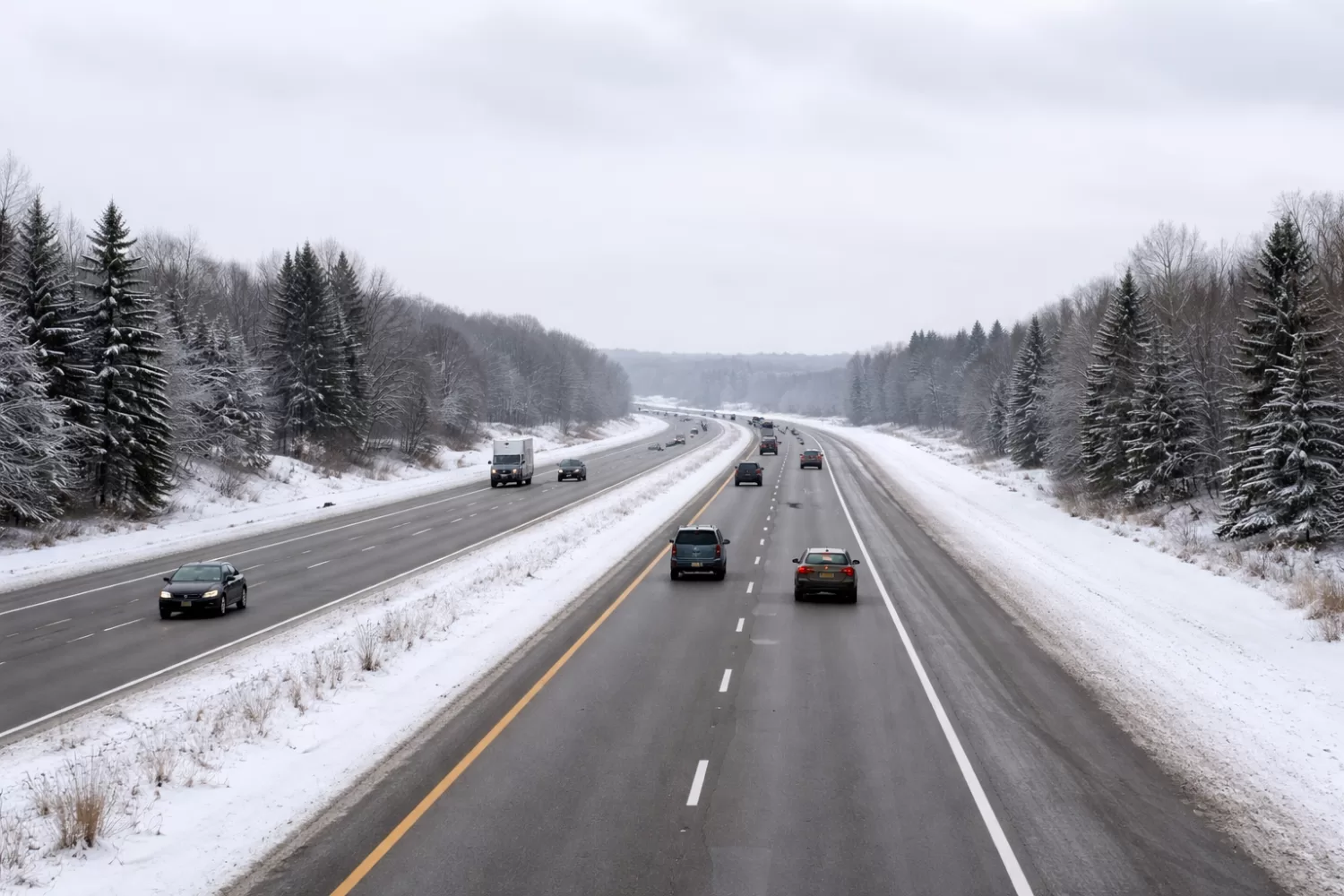
Let’s start with the area where winter risk is most visible — road travel.
Federal Highway Administration data shows that each year in the United States:
- Roughly 1,800 deaths occur on snowy or icy roads.
- Over 130,000 injuries are linked to wintry pavement.
- About 20–24% of weather-related crashes involve snow, sleet, or ice.
Those numbers sound alarming in isolation.
But context changes the interpretation:
- Only about 1–2% of all fatal crashes occur in wintry conditions.
- Summer consistently records more fatal crashes than winter.
- August typically produces more fatalities than any winter month.
- More miles are driven in summer — roughly 20% more — increasing exposure and speed-related risk.
Winter increases crash exposure.
It does not produce the highest seasonal fatality totals.
That suggests winter travel risk is not inevitable. It is situational.
It can be helpful to look more closely at whether road trips are safe during winter conditions.
Flying in Winter: More Delays, Not More Crashes
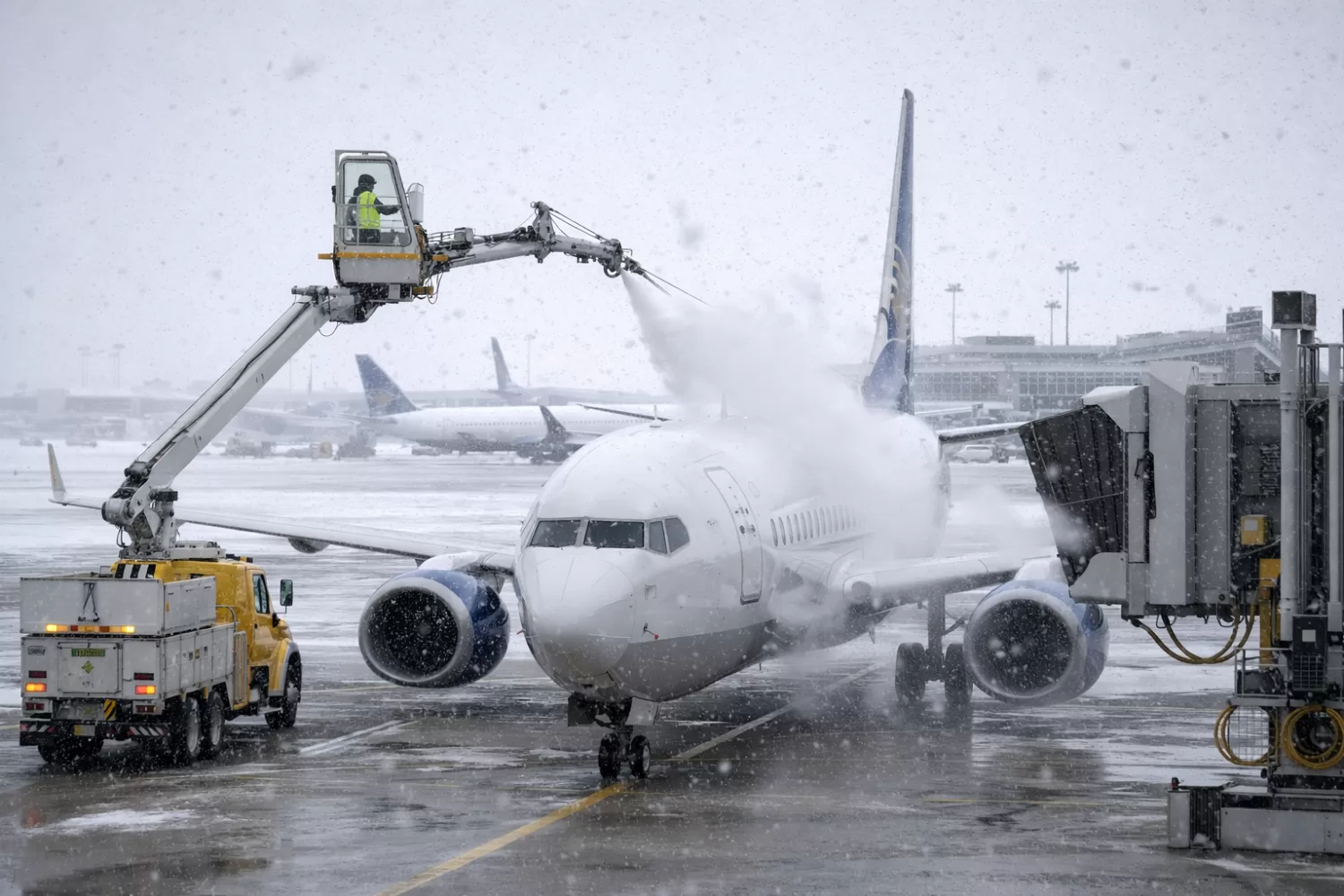
According to Federal Aviation Administration safety reporting, commercial aviation does not show a seasonal spike in fatal crash rates during winter months.
Instead, winter affects reliability:
- Major storms can cancel thousands of flights in a single day.
- Airlines issue travel waivers ahead of storms.
- Airports deploy mandatory de-icing procedures.
- The FAA implements ground delay programs proactively.
Winter’s primary aviation outcome is delay — not disaster.
That distinction matters.
Cancellations are a safety mechanism.
They reflect infrastructure responding to risk, not failing under it.
Statistically, flying remains far safer than driving per mile traveled in all seasons — and winter does not reverse that relationship.
Most Winter Days Are Routine — Risk Peaks During Specific Storms
Winter conditions are not uniform.
Most winter travel days involve cold temperatures, not blizzards.
Severe storms affect large regions periodically, not continuously. Even in snowy regions, hazardous driving conditions occur in episodes tied to specific weather systems.
Here’s where it gets interesting.
Research shows:
- The first snowfall of the season produces a measurable spike in crash risk.
- Subsequent snowfalls show lower risk as drivers adapt.
- Property damage crashes increase during visible storms.
- Fatal crashes may decrease during severe snowfall because drivers slow down or stay home.
This is critical.
Winter travel risk spikes during discrete events.
It is not a constant background condition.
Because of this variability, shorter winter trips often carry lower overall exposure — simply because they reduce the window in which conditions can change.
Human Behavior: The Dominant Variable
Across all seasons, transportation safety research consistently finds that human error contributes to the overwhelming majority of serious crashes.
In winter specifically:
- Speeding is involved in a large share of fatal crashes on icy or wet roads.
- Failure to adjust for conditions increases stopping distance dramatically.
- Holiday time pressure amplifies fatigue and rushed decisions.
- Many drivers do not prepare their vehicles adequately for winter.
Trip structure also plays a role. Short, tightly scheduled trips — especially weekend travel in winter — reduce flexibility. When winter conditions shift unexpectedly, limited time buffers can increase stress and compress decision-making.
Snow and ice create the environment.
But behavior decides what happens next.
And this changes the safety conversation entirely.
In fact, research shows a paradox:
On clearly bad snow days, fatal crashes sometimes decrease relative to dry days because drivers compensate — slowing down, canceling trips, or increasing caution.
Summer’s invisible risk — overconfidence, higher speeds, heavier travel volume — often produces more fatalities than winter’s visible hazards.
Winter feels more dangerous because the threat is obvious.
But obvious threats often trigger adaptive behavior.
Infrastructure: Designed for Winter
Winter travel in the United States operates within a system built specifically to manage cold-weather risk.
Highways and airports do not treat winter as an anomaly.
They implement:
- Preemptive anti-icing before storms
- Snow removal operations
- Real-time road weather monitoring
- Regulated aircraft de-icing
- Storm advisories and travel waivers
- Ground delay programs before conditions deteriorate
Studies show that early road treatment significantly reduces crash rates. Aviation cancellation policies prioritize safety over schedule reliability.
This does not eliminate risk — but it significantly reduces and manages it.
Winter risk exists within a structured response framework.
Perception vs. Statistical Reality
Surveys consistently show that many Americans believe winter is the most dangerous season for travel.
Fatal crash data does not support that belief.
The perception gap has psychological roots:
- Winter storms are dramatic and widely covered by media.
- Snow and ice are visually threatening.
- Major storm events are memorable.
- Summer fatalities occur quietly and diffusely across thousands of incidents.
Visible risk often feels larger than statistical risk — this is where perception and probability diverge.
This does not mean winter is safe by default.
It means fear often exceeds probability.
Comparison Between Driving and Flying in Winter
When comparing transportation modes at a high level:
- Driving carries higher fatality rates per mile than commercial aviation in all seasons.
- Winter increases driving exposure to hazardous pavement conditions.
- Winter does not show a comparable increase in commercial aviation accident rates.
- Aviation responds to risk primarily through delay and cancellation.
That reinforces a key conclusion:
Winter risk varies by mode.
It is not uniform across all travel types.
It also varies by distance and trip structure. A short distance winter drive carries a different exposure profile than extended across multiple weather zones.
The Real Answer: Is Winter Travel Inherently Unsafe?
The evidence does not support a blanket verdict.
Winter travel:
- Increases exposure to snow and ice hazards.
- Produces measurable spikes in crash rates during storm events.
- Does not produce the highest seasonal fatality totals.
- Does not make commercial aviation inherently more dangerous.
- Is heavily influenced by human decision-making.
- Operates within infrastructure designed for cold-weather management.
So, are winter trips safe?
They aren’t automatically dangerous — and they aren’t automatically safe either.
Winter increases exposure to certain hazards. It does not guarantee harm.
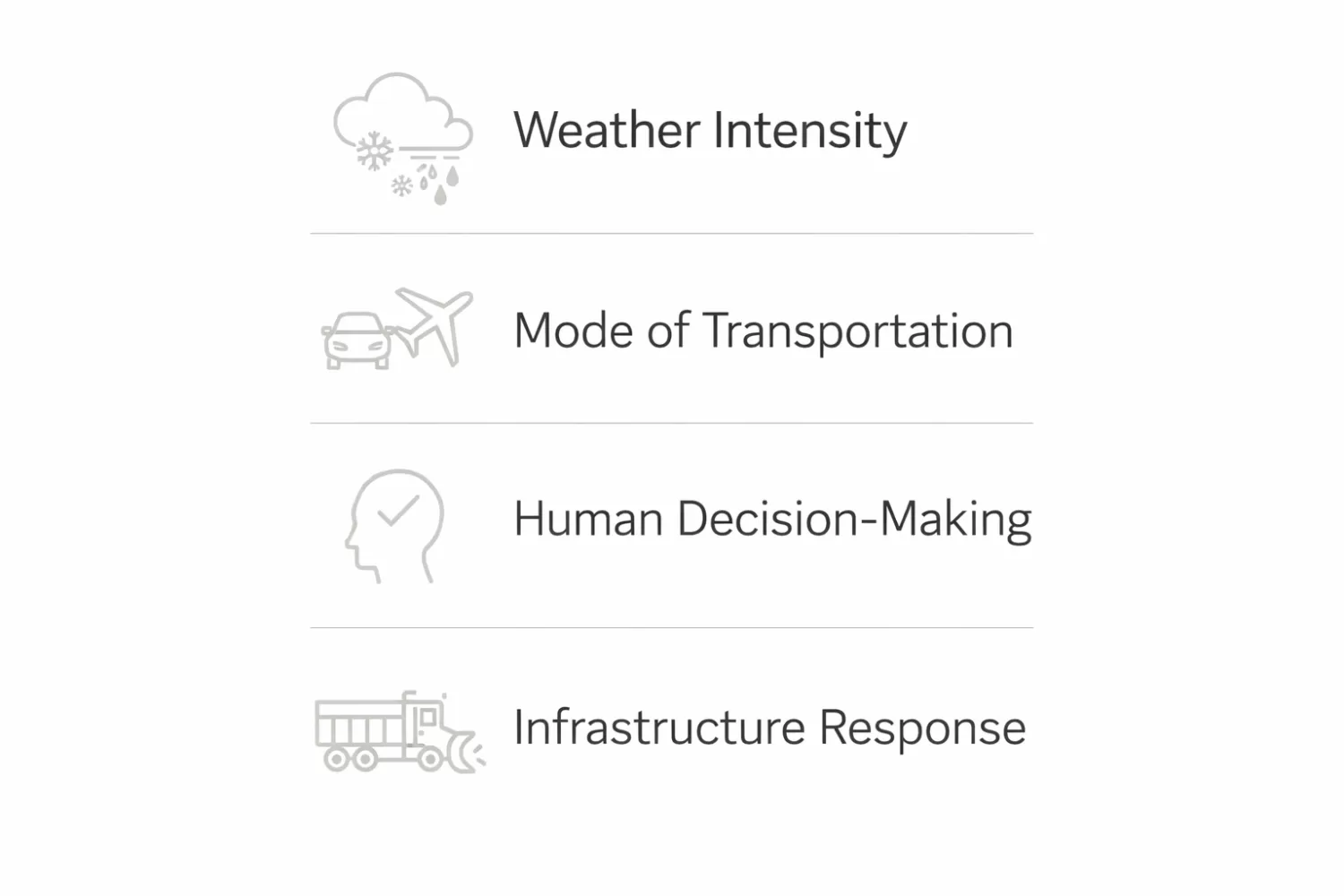
In practical terms, winter travel safety depends on four variables:
- The intensity of the weather event
- The mode of transportation
- Human decision-making
- Infrastructure response
When those variables are stable, winter travel is routine.
When they align negatively, risk increases.
Most winter trips end in delay, not injury.
Most fatal crashes occur outside of winter.
The season does not determine safety by itself.
Conditions and behavior do.
Winter does not decide the outcome — preparation and judgment do.
This conclusion is based on multi-year federal transportation data, peer-reviewed research, and seasonal trend analysis — not isolated storm events or single-year spikes.
Frequently Asked Questions
Is winter the most dangerous season to travel in the US?
No. Fatal crash data shows summer months consistently record higher overall traffic deaths than winter, largely due to higher travel volume and speed.
Are flights more dangerous during snowstorms?
Commercial aviation does not show increased fatal accident rates in winter. Airlines typically cancel flights during severe weather, reducing exposure to risk.
Why do winter trips feel more dangerous than they are?
Winter hazards are highly visible and heavily covered by media. Research shows people often overestimate seasonal risk based on dramatic storm events.
Does snow automatically make roads unsafe?
Snow increases exposure to risk, but outcomes depend heavily on driver behavior, speed adjustment, and infrastructure response.
Sources & Data References
This article is based on long-term US transportation and weather safety data from:
- National Highway Traffic Safety Administration (NHTSA) – Fatality Analysis Reporting System (FARS)
- Federal Highway Administration (FHWA) – Road Weather Management Program
- Federal Aviation Administration (FAA) – Aviation Safety & Delay Reporting
- National Oceanic and Atmospheric Administration (NOAA) – Winter Storm Monitoring
- National Transportation Safety Board (NTSB)
- Peer-reviewed research including Eisenberg & Warner (Effects of Snowfalls on Motor Vehicle Collisions)

The Travel Joint Editorial Team creates clear, research-driven travel guides designed to help readers make informed decisions about routes, safety, costs, and travel expectations. Our content is based on structured analysis of publicly available information and common travel patterns, with a focus on practical, honest answers for US-based travelers.