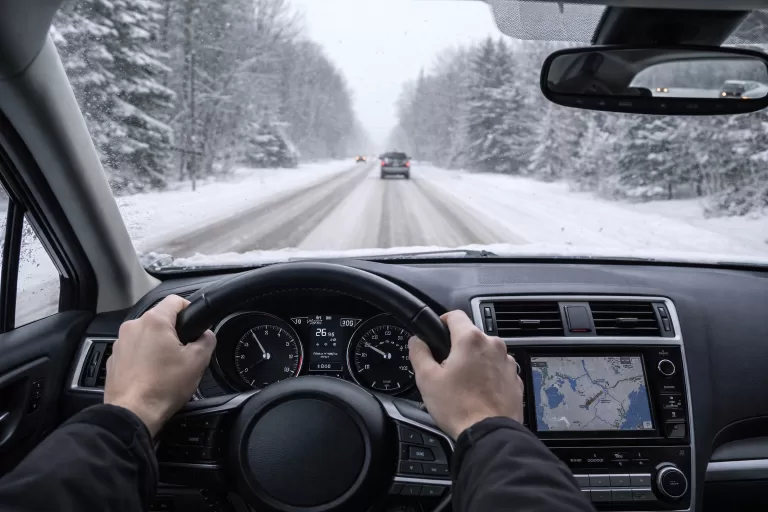
Are Road Trips Safe During Winter? What US Data Says About Snow, Ice, and Driving Risk
Quick Answer: Winter road trips are not inherently unsafe, but they do carry elevated risk compared with normal driving conditions. Snow, ice, and reduced visibility increase the chances of crashes, particularly during storms or freezing rain events.
However, national data shows that most winter crashes result in property damage or injuries rather than fatalities. In many cases, driver behavior — such as speeding or following too closely — plays a larger role in accidents than winter weather itself.
In other words, winter road travel is conditionally risky, not automatically dangerous.
This question is part of a broader concern many travelers have about cold-season travel overall. If you’re evaluating winter travel more broadly, it’s helpful to understand whether winter trips are safe in general before focusing specifically on road travel.
What the Data Says About Winter Road Crashes
According to the Federal Highway Administration (FHWA
Each year in the U.S.:
- More than 536,000 vehicle crashes occur on snowy, slushy, or icy pavement.
- These crashes lead to over 136,000 injuries annually.
- Roughly 1,300 fatalities are linked to winter road conditions.
While those numbers sound significant, they represent only a small share of total traffic deaths in the United States, which typically exceed 40,000 annually.
This distinction matters.
Winter weather clearly increases crash exposure, but fatal crashes remain a minority compared with overall road deaths. Many winter crashes occur at lower speeds due to cautious driving and poor traction, which reduces the likelihood of fatal outcomes.
The data suggests that winter road trips increase risk — but they do not dominate traffic fatalities.
Interestingly, winter does not produce the highest number of traffic fatalities in the United States. Transportation data shows that summer months often record more fatal crashes, largely because travel volumes increase and drivers travel at higher speeds during warmer weather.
Why Snow and Ice Make Winter Road Trips Riskier

Winter road danger largely comes from how snow and ice affect traction and visibility.
One of the most important factors is stopping distance.
Under normal dry conditions, vehicles stop relatively quickly when brakes are applied. On snow and ice, that distance increases dramatically:
- On packed snow, stopping distance may be roughly three times longer than on dry pavement.
- On ice, stopping distance can become up to ten times longer.
This mechanical reality explains why winter crashes often involve sliding, spinning, or vehicles failing to stop in time.
Certain winter conditions are especially hazardous.
Black ice, a thin and nearly invisible layer of ice on road surfaces, can cause sudden traction loss. Drivers often mistake it for wet pavement, making it particularly dangerous.
Freezing rain is another high-risk condition. Unlike snowfall, which builds gradually, freezing rain forms a smooth glaze of ice that eliminates tire grip almost instantly.
Snow accumulation introduces additional risks by reducing visibility and forcing drivers to slow down. Research shows that traffic speeds on major roads can decline by 30–40 percent during snowy conditions.
These environmental factors do not automatically cause crashes, but they create conditions where mistakes become far more consequential.
How Distance Changes Winter Road Trip Risk
Road trips differ from normal daily driving because they involve longer distances and extended exposure to changing conditions.
The longer a trip becomes, the more variables enter the equation.
Drivers traveling across multiple states may encounter different weather systems, including snow bands, freezing rain, or sudden temperature changes that create icy pavement. These transitions increase the likelihood of encountering hazardous road conditions during a single journey.
Longer trips also introduce another factor: fatigue.
Driving for extended periods can reduce reaction times and increase the likelihood of errors, particularly during nighttime hours when visibility is already limited.
Data from transportation studies suggests that winter driving sees a slightly higher crash rate per mile traveled. Even though people typically drive fewer miles during winter months, a disproportionate share of crashes still occurs during the season.
Distance itself does not create danger — but longer road trips increase exposure to the variables that make winter travel more challenging.
Human Behavior: The Real Crash Factor
While winter weather creates hazardous conditions, research consistently shows that human behavior is the primary cause of most crashes.
Traffic safety studies often cite that roughly 94% of crashes involve a driver-related critical factor, such as speeding, distraction, or poor decision-making.
Winter conditions simply amplify the consequences of those mistakes.
Common behavioral factors in winter crashes include:
- Driving too fast for road conditions
- Following too closely on icy roads
- Sudden braking or steering movements
- Overconfidence in vehicle traction
Speeding remains one of the most significant contributors to winter crashes. When drivers fail to reduce speed on icy or snow-covered roads, stopping distances increase dramatically, making collisions far more likely.
Another frequent issue is tailgating. On dry pavement, vehicles may stop within a few car lengths. On ice, stopping distances can be several times longer, making standard following distances inadequate.
In many cases, winter weather does not cause the crash directly. Instead, it creates an environment where routine driving errors become far less forgiving.
How Highway Infrastructure Reduces Winter Risk

Modern highway systems are designed to manage winter travel risk rather than eliminate it entirely.
Across the United States, state and local agencies spend more than $2 billion annually on snow and ice control operations. These efforts include snowplowing, road salting, and anti-icing treatments applied before storms arrive.
These systems significantly reduce crash risk.
Studies have shown that road salt and anti-icing treatments can reduce winter crash rates by 20–85 percent, depending on conditions and timing. Early treatment of highways prevents ice from bonding to pavement, making roads safer during storms.
Technology also plays a growing role in winter safety.
Some highways use variable speed limits that automatically lower speed limits during storms. These systems encourage drivers to slow down when conditions worsen and have been associated with measurable reductions in crash rates.
Weather monitoring systems also allow transportation agencies to track road temperatures and precipitation in real time, helping them deploy maintenance crews before dangerous conditions develop.
Together, these systems create a transportation network designed specifically to manage winter conditions.
Why Winter Road Trips Feel More Dangerous
Despite the data, many drivers perceive winter road trips as extremely dangerous.
Psychology plays a role in this perception.
Winter hazards are highly visible — snowstorms, icy roads, and poor visibility are easy to see and easy to fear. News coverage of major storms can further reinforce the perception that winter travel is uniquely dangerous.
However, statistical reality tells a more nuanced story.
Although winter weather contributes to hundreds of thousands of crashes each year, the majority are non-fatal. Fatal crashes occur more frequently in other seasons when travel volumes and driving speeds increase.
This creates a perception gap.
Winter road trips feel more dangerous because the hazards are obvious. But drivers also tend to slow down and exercise greater caution during winter conditions, which reduces the likelihood of severe crashes.
The Four Variables That Determine Winter Road Trip Safety

Research consistently shows that the safety of winter road trips depends on four key variables.
Weather intensity
Freezing rain and heavy storms create far more dangerous conditions than light snowfall or cold temperatures alone.
Trip distance
Longer trips increase exposure to changing weather systems and driver fatigue.
Driver behavior
Speed, following distance, and decision-making remain the most important safety factors.
Infrastructure quality
Highways with strong snow removal and anti-icing programs are significantly safer during winter storms.
When these variables align favorably, winter road trips are routine and manageable. When they combine negatively — severe weather, long distance, risky driving behavior, and poor infrastructure — crash risk rises significantly.
Frequently Asked Questions
Are winter road trips dangerous?
Winter road trips can become dangerous during severe weather events such as freezing rain or heavy snowstorms. However, most winter driving occurs without major incidents, and many crashes are related to driver behavior rather than weather alone.
Is it safe to drive long distances during winter?
Long-distance winter driving can increase exposure to changing weather conditions and driver fatigue. However, maintained highways and careful driving often make long winter trips manageable when severe storms are avoided.
Are highways more dangerous in winter?
Highways can feel more dangerous during winter because vehicles travel at higher speeds. Snow, ice, and reduced traction increase stopping distances, which is why speed adjustments are important during winter travel.
Final Verdict
So, are winter road trips safe, or are they more dangerous than normal travel?
The data suggests that they can be — but not automatically.
Snow and ice clearly increase the risk of crashes by reducing traction and visibility. However, most winter accidents are non-fatal and heavily influenced by driver behavior rather than weather alone.
Modern highway maintenance, snow removal systems, and driver adaptation all play important roles in reducing winter travel risk.
In practical terms, winter road trips are conditionally manageable.
The season itself does not determine safety — weather intensity, driver decisions, trip length, and infrastructure response do.
Sources & Data References
This article is based on transportation safety data and research from:
- Federal Highway Administration (FHWA) – Road Weather Management Program
- National Highway Traffic Safety Administration (NHTSA) – Fatality Analysis Reporting System
- U.S. Department of Transportation (DOT) – Winter weather crash statistics
- Road weather and winter maintenance research from federal transportation studies

The Travel Joint Editorial Team creates clear, research-driven travel guides designed to help readers make informed decisions about routes, safety, costs, and travel expectations. Our content is based on structured analysis of publicly available information and common travel patterns, with a focus on practical, honest answers for US-based travelers.